
What the NBA Got Right That Most Funders Miss
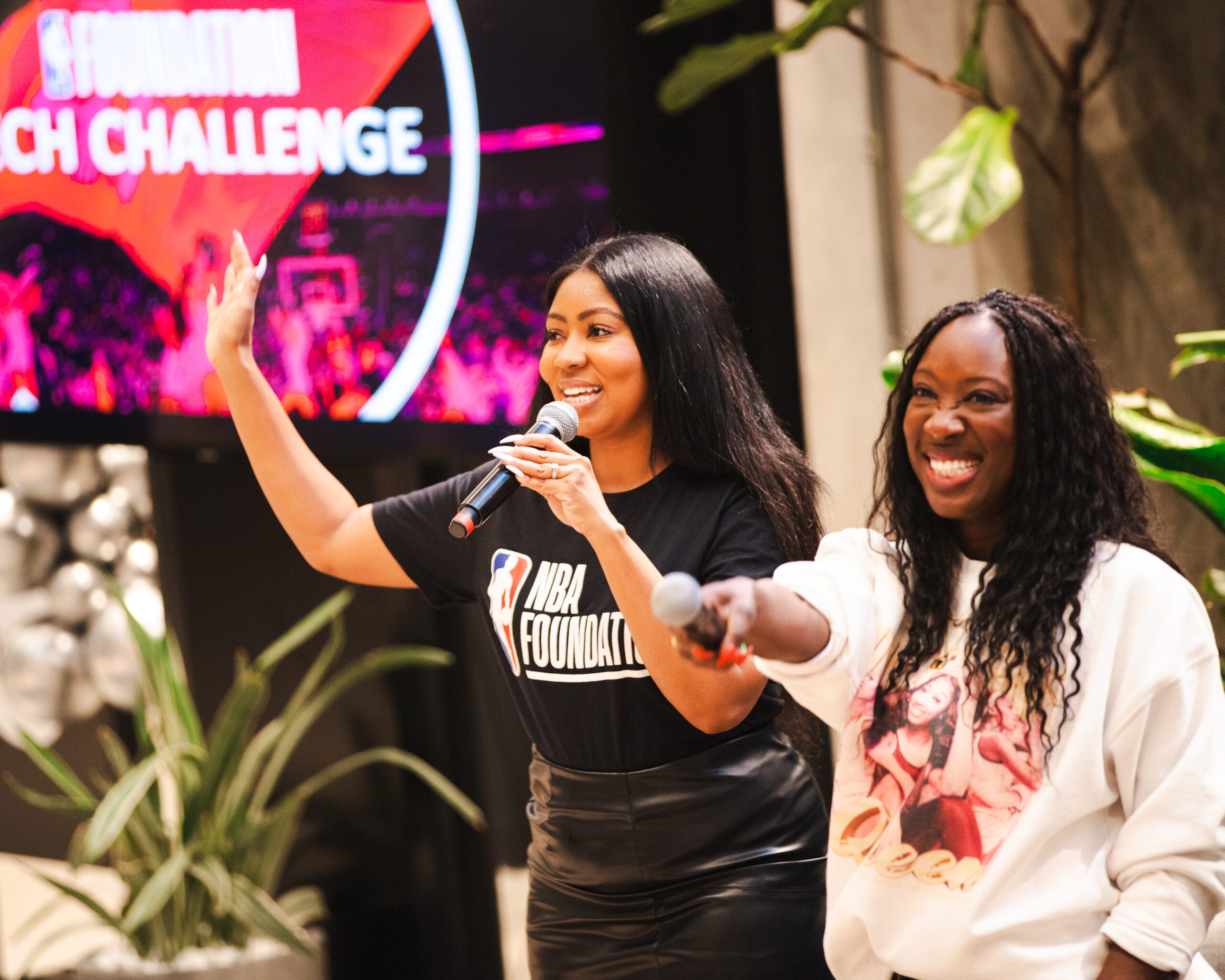
I never played basketball, but when a client gets invited to an event hosted by the NBA Foundation, you find a way to say yes.
We walked into the Moda Center. I was skeptical, because these rooms usually have a familiar shape.
People with the most power tend to find each other, and the whole evening becomes a performance of access.
This was different.
Ruth Jurgenson, the NBA Foundation’s Executive Director, was walking toward people as they came through the door.
She wasn’t waiting to be approached, but moved toward strangers. It was a small thing, but it changed the temperature of the room.
Then they gave the stage away.
Past grantees stood up and talked to potential future grantees about what the process was like.
Curtis Youn, Executive Director of the Blueprint Foundation, put it plainly:
“Before we applied, we were doing the work but had no real system for measuring or proving it. We expected to be penalized for that gap. Instead, the NBA Foundation funded us to close it.”
The foundation treated the gap as the problem worth solving, not as disqualifying evidence.
That is a different theory of funding than most foundations operate on.
Most of the time, the implicit deal is this: show me strength, show me scale, show me that you already have what I would be paying for, and then I will pay for it.
The pressure that creates is visible everywhere.
Organizations describe themselves as larger than they are. Grant applications become exercises in projecting certainty about outcomes that may need more curiosity.
I have written those applications.
What the NBA Foundation modeled is that proximity to an organization’s actual challenges produces better funding decisions than polished presentations of imagined strength.
Curtis got funded because someone at the foundation stayed in the conversation long enough to understand what was missing.