How We Won the Oregon Community Foundation Grant for INCIGHT in 2025
In 2025, my client INCIGHT won a grant from the Oregon Community Foundation, securing the maximum funding amount of $40,000. INCIGHT is a nonprofit that’s been around for 20 years helping people experiencing disabilities unlock their fullest potential.
I want to share the step-by-step process we used not just to show the mechanics but to highlight the preparation, collaboration, and care that made it possible.
Outreach
The process began the moment we saw OCF’s open call.
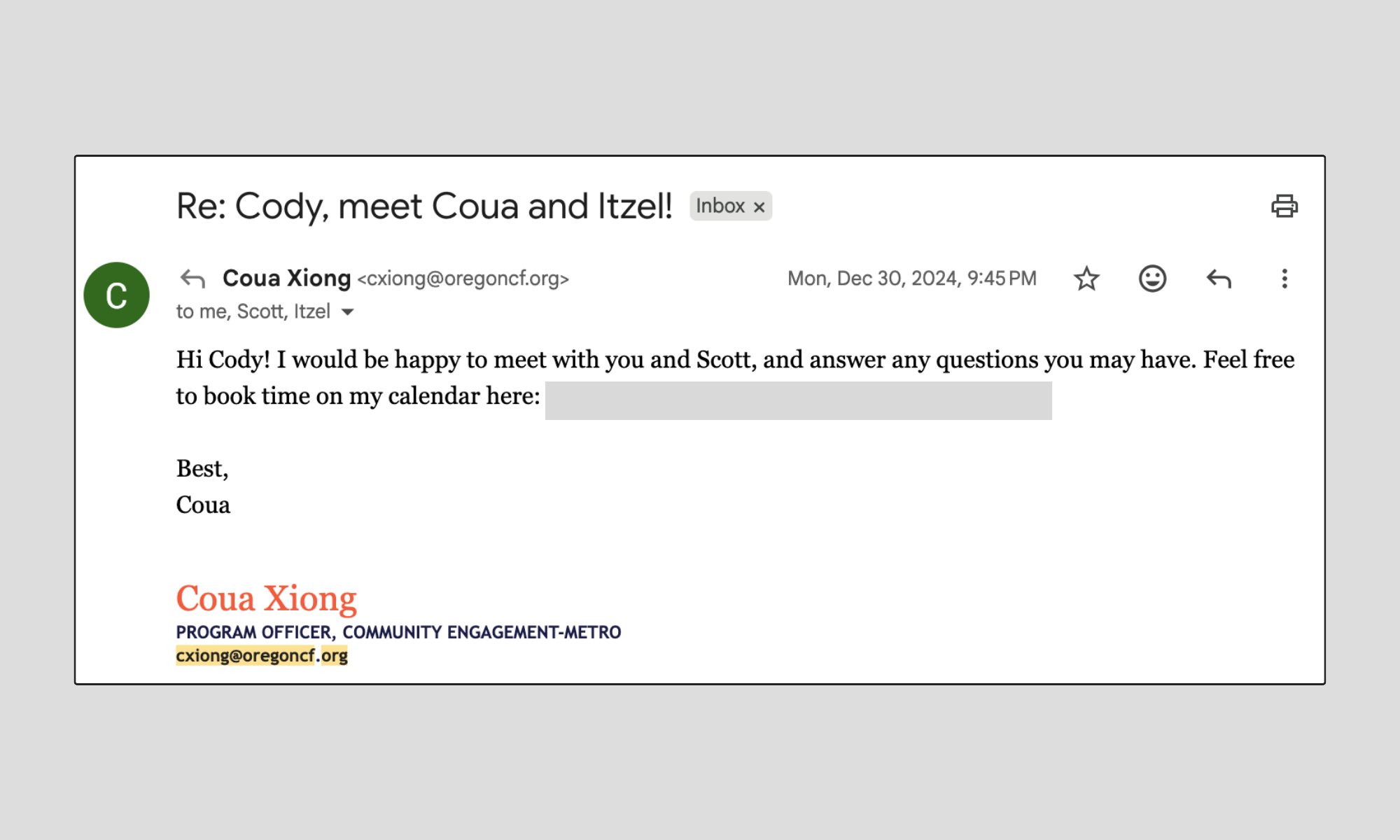
After carefully reviewing their funding priorities and believing that INCIGHT was a strong fit, we reached out to the program officers to start a conversation.
Funders who are passionate about their work are usually open to meeting at least once. They genuinely want to hear from organizations, and reaching out is not an annoyance but part of their role and their enthusiasm for making an impact.
Within a week of sending our outreach email, OCF replied, opening the door to the next stage.
Meeting With the Funder
At its core, this meeting was a marketing conversation.
The relationship mattered but both sides knew this was about more than introductions. There was money and opportunity on the table.
Before our meeting, I worked closely with Scott during our weekly check-ins to plan our approach. We went over questions, points to highlight, and what we wanted the funder to feel before, during, and after the conversation.
At the end of our meeting, Coua gave us three key insights on how to best prepare our grant application:
Show how the community shapes your decisions, leadership, programs, and include concrete stats.
Show how you have the capacity and knowledge to respond to specific community needs.
Be specific about geography and partnerships. Don’t lean on vague statements like “statewide” reach.
Perhaps the most important insight came when she said:
“If I don’t have a relationship with you and don’t remember you, it’s going to be harder to read 300 applications and recall which organizations are doing great work. Relationships really do matter.”
Meet With the Executive Director
Everything leading up to this stage was designed to make the Executive Director Download as smooth and effortless as possible.
The goal was to clear the path so Scott could focus on sharing his insight, passion, and vision without getting weighed down in logistics.
After the conversation with the funder, I transferred all the application questions into a Google document.
This created a stable, editable copy that did not rely on a grant portal that might glitch or time out. We added the funder’s priorities at the top so the executive director could stay oriented and grounded throughout the process.
Then we arrived at the heart of it.
Instead of filling out each question alone, we reviewed them together. I would read a question aloud and Scott would respond verbally.
His answers came alive with genuine passion and detail about INCIGHT’s programs. Stories emerged naturally, without worrying about character counts or formatting.
This approach is designed for executive directors.
They speak freely, while I capture and shape their responses into compelling text. AI note-taking tools helped record Scott’s words accurately, keeping the application authentic and connected to the organization’s work.
If a question stumped us, Scott would leave one or two sentences and I would spend the week building from there.
Draft and Refine the Grant
Once we had all the answers, I wove them into a coherent, compelling application.
Using funder priorities and the organization’s impact as a foundation, I focused on three questions:
Is the request clear?
Did you make me FEEL something?
Where are you taking us?
Scott did not need to manage this process.
He continued leading his people and programs while I handled the grant behind the scenes.
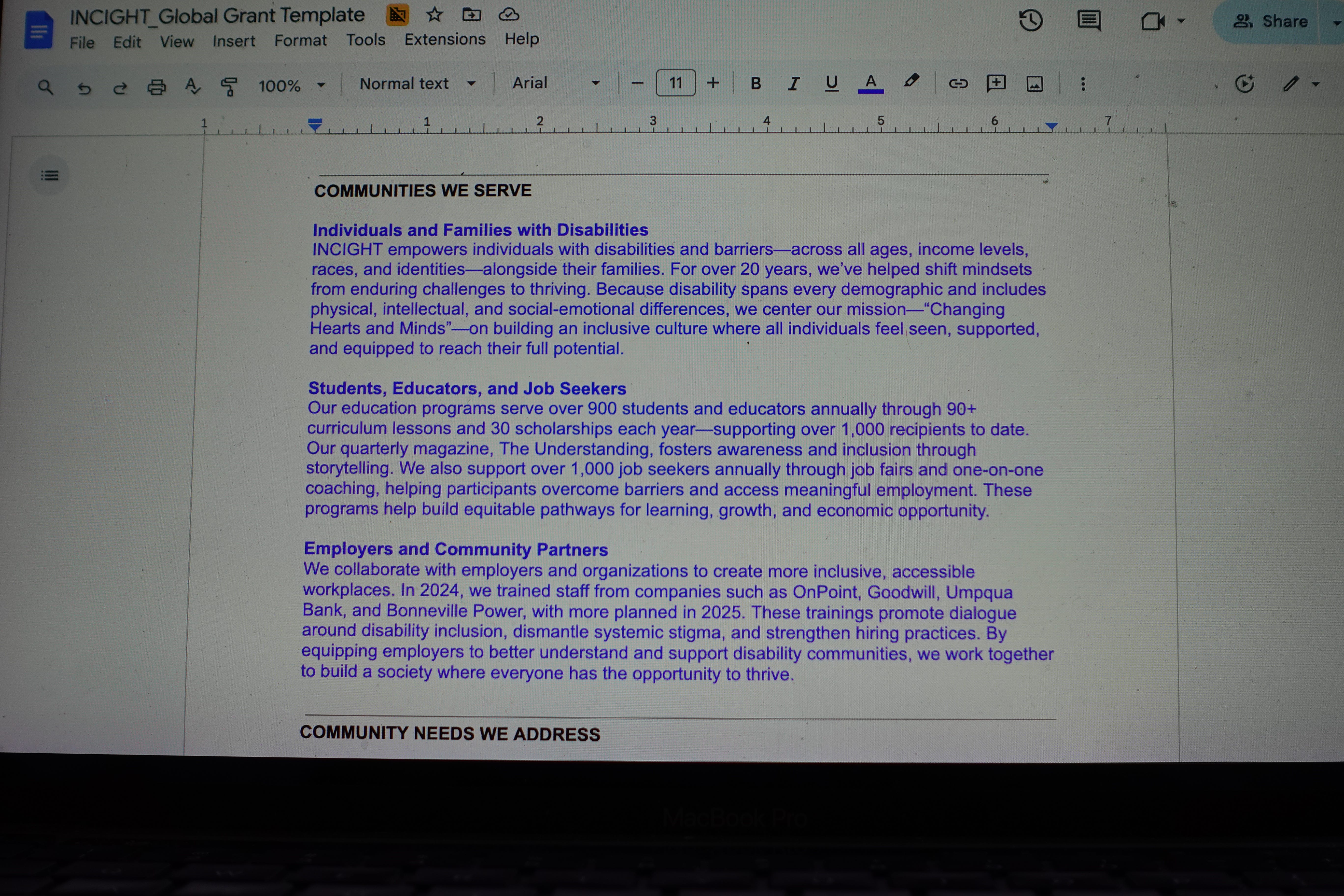
We also used a global grant template, a tool I learned from grant writing legend Deborah Steinkopf. It holds the organization’s mission, programs, and key facts for easy reference and helps keep language consistent across applications while allowing small adjustments to match each funder’s priorities.
They could continue leading their programs and people while I handled the grant behind the scenes.
Once the draft was complete, Scott reviewed it. Some clients prefer minor tweaks, others simply approve the final version.
The application was submitted on time and fully respecting the funder’s process.
“Submit and Forget”
Once the grant was submitted, we stopped talking about it. No refreshing inboxes, no decoding silence, no extra nudges to program officers. We logged it in INCIGHT’s grant tracker, noted the decision date, and closed the tab.
We had already done what mattered: clear writing, careful revisions, and following instructions. After that, it was no longer in our hands.
We treated the submission like planting something. You prepare the soil, water it, give it light, and then resist the urge to dig it up every day to check whether it has roots. Healthy things are allowed to take their time. Results arrive on their own schedule.
The Result
The result was $40,000 to fund INCIGHT’s programs.
The lessons behind the number were even more important. Grant success grows from building relationships early and authentically, preparing thoughtfully for conversations, and keeping the process narrative and from the heart rather than purely technical. Organizing information in templates help with both current and future applications.
We had a lot of fun throughout the process, and it was deeply rewarding to know that this win would benefit over a thousand people experiencing disabilities.
I’ve gone through this process many times with different clients and funders. If you’re interested in exploring more, let’s connect.