
If You Cannot Take a Meeting, You Have Too Much Money to Steward

I attended a call on behalf of a client hosted by U.S. Bank’s foundation. The person leading it mentioned early on that there were over 4,000 people listening, the way you say something when you want the room to understand how overwhelming a job can be.
Four thousand people doing work in communities carved out time in their day, showed up, and listened to one person who would never have the bandwidth to know all of them.
That is the model many large foundations are running right now.
When there is no relationship between a funder and the people seeking funding, organizations are left to guess. They read your website, study your language, and build proposals designed to sound like what they think you want, rather than reflect what the foundation actually cares about.
This adds a layer of complexity to the grantmaking process because a lot of nonprofits are not just accountable to you. They answer to board members who may not have looked at your website once, and who have been shaping the organization’s direction long before your dollars arrived.
You are the only person in this equation with the standing to interrupt that drift before it happens.
That is what a relationship does, and it starts with a single conversation. You sit across from someone and say, tell me what you are actually trying to do, and what you know becomes part of how they think before the dollars ever move.
Now look at how widespread this problem actually is.
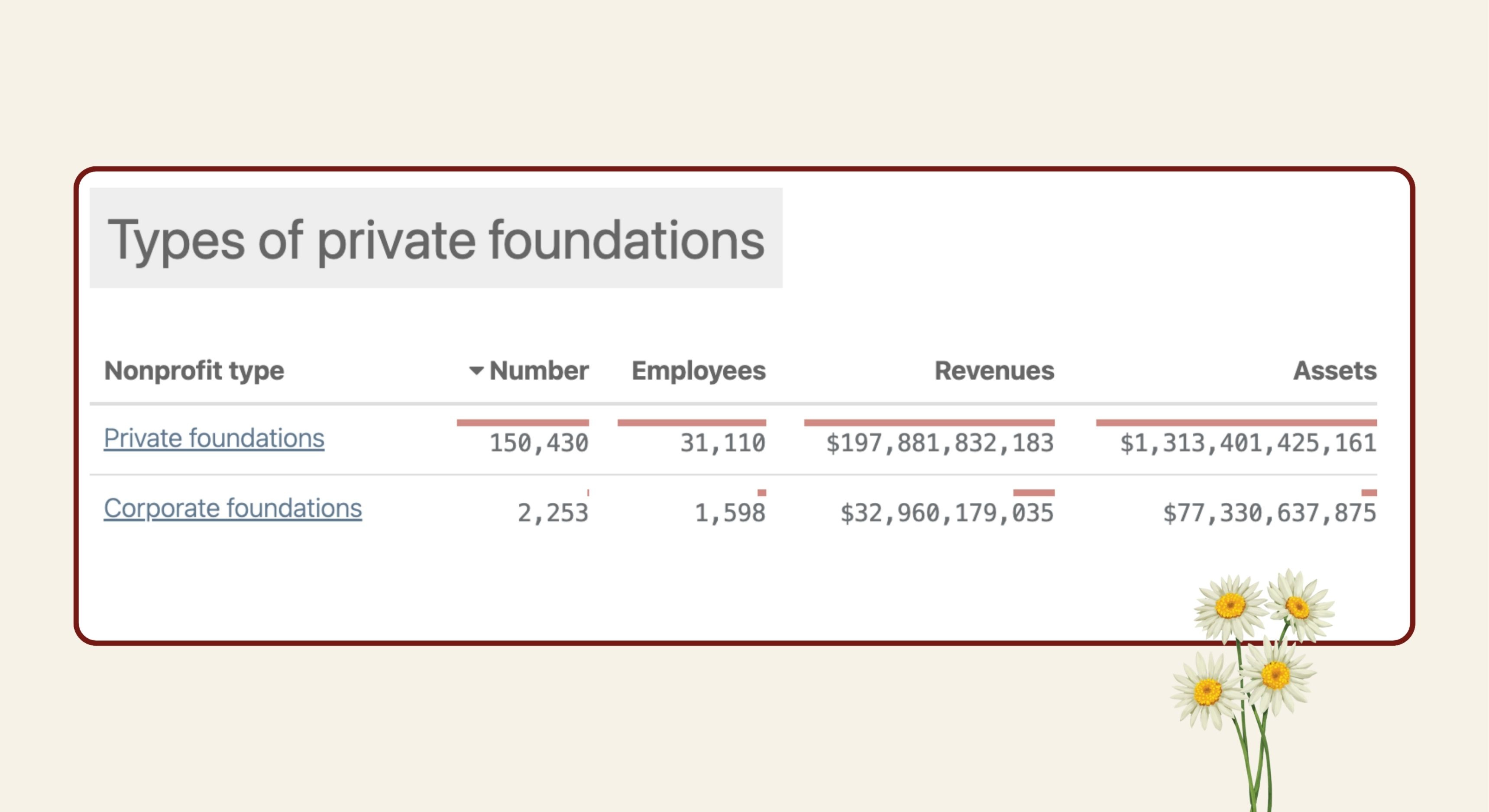
There are over 150,000 private foundations in the United States, collectively employing just over 31,000 people, roughly one staff person for every five foundations in the US. Even among larger foundations, only one in six has any paid employees at all.
More than half identify as family foundations, the largest share operating with few or no staff. The majority of private philanthropic capital in the US is being stewarded by people without the infrastructure to know what is happening with the dollars they are deploying.
The sector is not short on money, it’s short on presence.
What does presence actually look like in practice? It exists on a spectrum, and both ends of it are instructive.
On one end is Jennifer Allen, Director of Responsive Grantmaking at the James F. and Marion L. Miller Foundation, a foundation with just over $20 million in assets. For years, when I reach out on behalf of a client, she takes the meeting, usually 15 to 30 minutes, and more often than not her answer is, this is not a good fit.
She points me toward other resources. She challenges me to think about how both my client and her foundation are actually viewing the work.
Those conversations have saved everyone in the room something they cannot get back. My client did not spend weeks preparing a proposal for a door that was never going to open, and Jennifer did not spend hours reviewing something that was never the right fit.
This is a program officer who understands that meeting with potential grantees is part of the job, because the foundation and the organizations knocking on its door are after the same things.
On the other end is Peter Levine, a general partner at Andreessen Horowitz. After surviving cancer, he launched the Levine Impact Lab, a foundation whose operational team sits side by side with each grantee, defines clear priorities, sets timelines, and stays in the room as a thought partner for the entire engagement.
One of his grantees, Southside Blooms in Chicago, went from a $700,000 organization to $1.7 million in a single year. Their founder credits the relationship, the monthly coaching, and the accountability that came from having someone genuinely invested in their direction.
A 15 minute conversation that saves a wasted application. A year of side by side partnership that doubles an organization’s capacity. Two very different levels of engagement, and the same thing running underneath both of them.
Staff who are empowered to show up.
You do not have to restructure everything to move in this direction. Hire people who can have conversations. Go find the organizations that will never find you. Sit with the ones already in your pipeline, whether they’re ready for your funding or not, and say what you see.
You have the resources, but it’s more than that. Nonprofits need relationship and accountability with funders that go beyond grant processes or reporting.